The modern FIFA World Cup is no longer just a celebration of football, it is a global celebration of culture, unity and commercial spectacle driven by intellectual property. While tournament organisers tightly control broadcasting, sponsorship, and merchandising rights, the growing economic power of individual athletes has shifted attention to a more complex and fragmented asset, image rights.
Elite players such as Cristiano Ronaldo, Lionel Messi and Mohamed Salah are not merely participants in the tournament, they are global brands whose names, representation, and personas generate substantial commercial value. Unlike trade marks or copyright, image rights lack a unified system of protection across jurisdictions. This creates both opportunities and legal uncertainty, particularly during high-profile international events.
What are Image Rights?
These rights consist of legal authority an individual has to control and profit from the commercial use of their identity which may include name, photograph, voice, signature or physical representation. While there is no single global regime for image rights, courts and legal systems have developed protection through a patchwork of doctrines.
In Irvine v Talksport Ltd, in the United Kingdom the court established that unauthorised use of a celebrity’s image in advertising can constitute false endorsement. Eddie Irvine successfully argued that a doctored image falsely suggested his endorsement of a radio station and the court confirmed that false endorsement can amount to passing off, even without a formal image right.
In Fenty v Arcadia Group Brands Ltd, pop star Rihanna succeeded in a claim against Topshop (British fashion brand) for selling a T-shirt bearing her image. In this case the court in the United Kingdom found the act of Topshop constituting “passing off” as fans would likely associate or believe the T-shit was official merchandise. The court held that the sale created a false impression of endorsement.
In the case of Zacchini v Scripps-Howard Broadcasting Co, held at Supreme Court in the United States of America, where a performer’s entire act was broadcast without consent. The court held that Scripps-Howard’s constitutional privilege of freedom of speech did not extend to broadcasting Zacchini’s entire performance without his permission, where the commercial value of performance was recognised by the court.
Athletes increasingly register trade marks to protect aspects of their identity. As an Example Cristiano Ronaldo holds a trade mark registration centred on CR7 and Usain Bolt has sought protection for his iconic “lightning bolt” pose.
How are image rights protected in South Africa?
South Africa does not have image rights protection; however image rights are protected under common law. In the case of Kumalo v Cycle Lab (Pty) Ltd held at the South Gauteng High Court, Johannesburg South Africa, the court held that unauthorised use of an individual’s image for purpose of advertising without the individual’s permission, creates a false impression and violates the individual’s rights to privacy and dignity. In this case an image of former Miss South Africa Julia Basetsana Kumalo was used by Cycle Lab for marketing campaign without her permission: the court held that:
“In the present matter, the plaintiff’s image has been used in a misleading way. It generates the false impression that she endorses the lady specific cycling products sold by the defendant and the defendant’s campaign to promote cycling among women. Use of her image in this manner constitutes a violation of her right to identity. The appropriation and misuse of the plaintiff’s image is wrongful and would be considered by persons of ordinary and reasonable sensibilities to constitute an iniuria which is deserving of legal protection. The use of the plaintiff’s photograph in an advertisement without her permission not only constitutes an infringement of the personality right to identity but also, as previously indicated, a violation of the plaintiff’s privacy, since a personal fact, namely her image, was publicly exposed contrary to her determination and will”.
This article demonstrates the need for celebrities and athletes to warrant a strong protection against misappropriation. In countries like the United Kingdom and United States of America they recognise false endorsement, image rights through passing off and rights of publicity as a protectable economic interest. In these jurisdictions image rights are treated and protected through passing off, branding, reputation and property rights. South Africa lacks a standalone uniform of protection of image rights; however, athletes should consider proactively registering for protection on their commercial identity through the registration of trade marks like: names, signatures, logos, distinctive phrases or branding elements like Caster Semenya has taken steps into securing trade mark protection linked to her identity and brand.
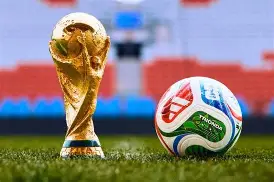
The 2026 FIFA World cup is currently co-hosted by United State of America, Canada and Mexico. It has seen commercially significant editions of the tournament with an increased number of teams and a global audience. Beyond the excitement on the pitch, the tournament represents a strong intersection of sport and intellectual property, where images rights, broadcasting rights and branding play a central role. Intellectual property becomes essential in balancing the commercial interests of players and sponsors, while safeguarding the integrity and economic value of the World Cup.
The FIFA World Cup underscores a fundamental shift in the sports industry; athletes are no longer just competitors but central IP assets in a global commercial ecosystem. However, the lack of harmonised protection for image rights leaves significant gaps in enforcement and certainty. As the commercial value of athlete identity continues to grow, so too does the need for clearer, more consistent legal frameworks capable of addressing the realities of modern sport. The continuous development of passing off to property rights in the UK and USA highlights a significate growth and recognition of images rights as a commercial asset. A proactive brand protection thus is trade marks is essential in the South African legal framework with a long term goal to reform a clear statutory protection of image rights.
References
Irvine v Talksport Ltd [2003] 2 AII.E.R 881 (CA)
Fenty v Arcadia Group Brands Ltd [2015] EWCA Civ 3 (22 January 2015)
Zacchini v Scripps-Howard Broadcasting Co. 351 N.E 2d 454
Kumalo v Cycle Lab (Pty) Ltd (31871/2008) [2011] ZAGPJHC 56 (17 June 2011)
Charmaine Nyudnu is an IP Associate at Tshaya Mashabela Attorneys who specialises in intellectual property law. Reach out to her to assist you in all your IP matters.
Author: Cindy Moshatane, Candidate Legal Practitioner
Reviewed and approved by: Charmaine Nyundu, IP Associate